
ARCHITECTURE
Moroccan architecture is one of the most visually distinct and cinematic styles in the world — a timeless fusion of Berber heritage, Islamic artistry, and Andalusian influence. Across the country, this architectural language shapes palaces, mosques, medinas, kasbahs, and everyday homes, creating environments rich in texture, geometry, and atmosphere. For filmmakers, Moroccan architecture offers a visual universe filled with intricate details, dramatic lighting opportunities, and authentic cultural depth.
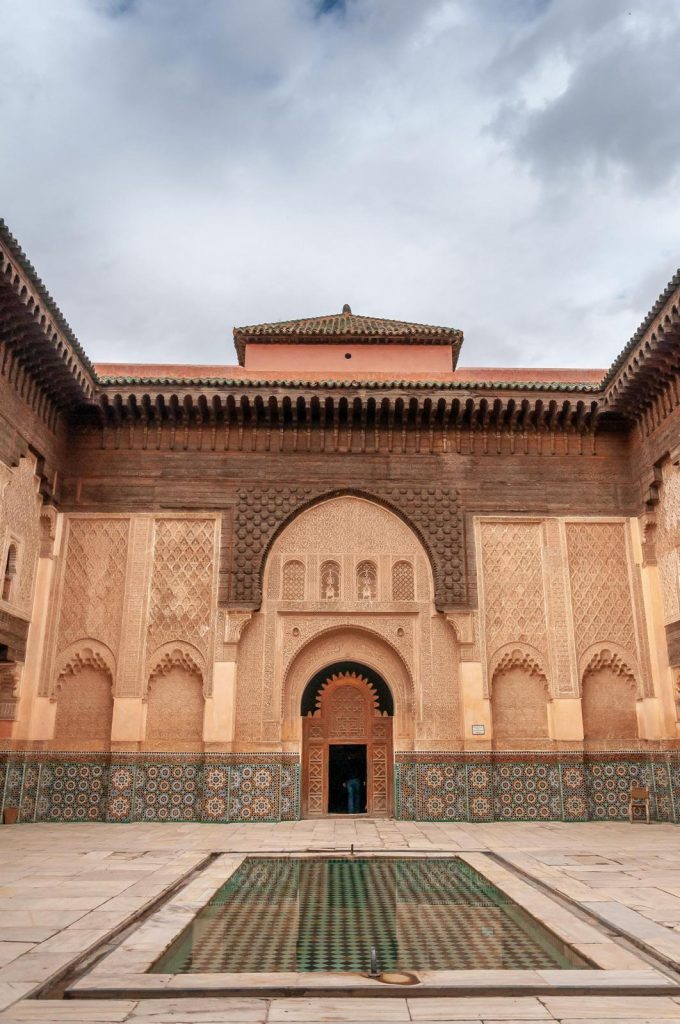
At the heart of this aesthetic are Morocco’s signature ornate arches — horseshoe arches, pointed arches, and the beautifully layered polylobed and lambrequin designs. These elegant curves, found in doorways, courtyards, and palace entrances, create natural frames that guide the eye and enhance composition on camera. Combined with shadowed corridors, patterned walkways, and carved stone details, they give filmmakers a dynamic mix of symmetry and softness.
Traditional Moroccan homes, or riads, embody the country’s architectural philosophy. Behind simple, understated exteriors lie stunning interior courtyards filled with light, fountains, orange trees, and handcrafted zellige tilework. These spaces offer complete visual contrast — intimate, serene, and filled with natural acoustics and diffused sunlight. Riads, palaces, and medina structures often feature carved cedar ceilings, stucco motifs, and painted woodwork that add layers of depth and visual interest to close-up and mid-range shots.
Color plays an essential cinematic role. Cities like Marrakech glow in warm ochre, while Chefchaouen washes its walls in blue. Across Morocco, interiors burst with vivid tile patterns, hand-painted doors, and intricate mosaics that create memorable backgrounds for character scenes, dialog sequences, and cultural storytelling. The country’s architectural palette reflects centuries of craftsmanship, blending earthy tones with vibrant artistic detail to create a look that is unmistakably Moroccan.
Monumental structures such as the Hassan II Mosque in Casablanca and the Koutoubia Mosque in Marrakech showcase the grandeur of Moroccan design on a monumental scale. Their towering minarets, geometric facades, and expansive courtyards provide breathtaking wide shots and sweeping panoramas. Historic madrasas like Ben Youssef in Marrakech and Bou Inania in Fes reveal some of the most intricate zellige and carved plaster in the Islamic world — perfect for capturing refined, ornamental beauty.
Beyond the cities, Morocco’s kasbahs and ksars introduce filmmakers to pre-Saharan earthen architecture, built from clay, straw, and stone. Nowhere is this more iconic than Aït Benhaddou, a UNESCO World Heritage site and globally recognized filming location, famously used in numerous international productions. Its multi-layered towers, winding alleys, and fortress-like silhouette against the desert sky create one of the most cinematic environments in North Africa.
Even Morocco’s medinas — in Marrakech, Fes, Tetouan, and Meknes — are living architectural worlds. Their narrow alleys, hidden riads, wooden balconies, carved gates, and bustling souks offer productions unmatched authenticity and atmosphere. Every turn reveals a new texture, a new shadow, a new architectural rhythm that enhances narrative and visual depth.
With Maroc Fixers providing access support, scouting, historical site coordination, and all required film permits, productions can unlock the full potential of these extraordinary spaces. Moroccan architecture is not merely decorative — it is storytelling through structure, pattern, light, and tradition. From intimate courtyard scenes to epic palace sequences, Morocco offers filmmakers a rich architectural canvas that elevates every frame.